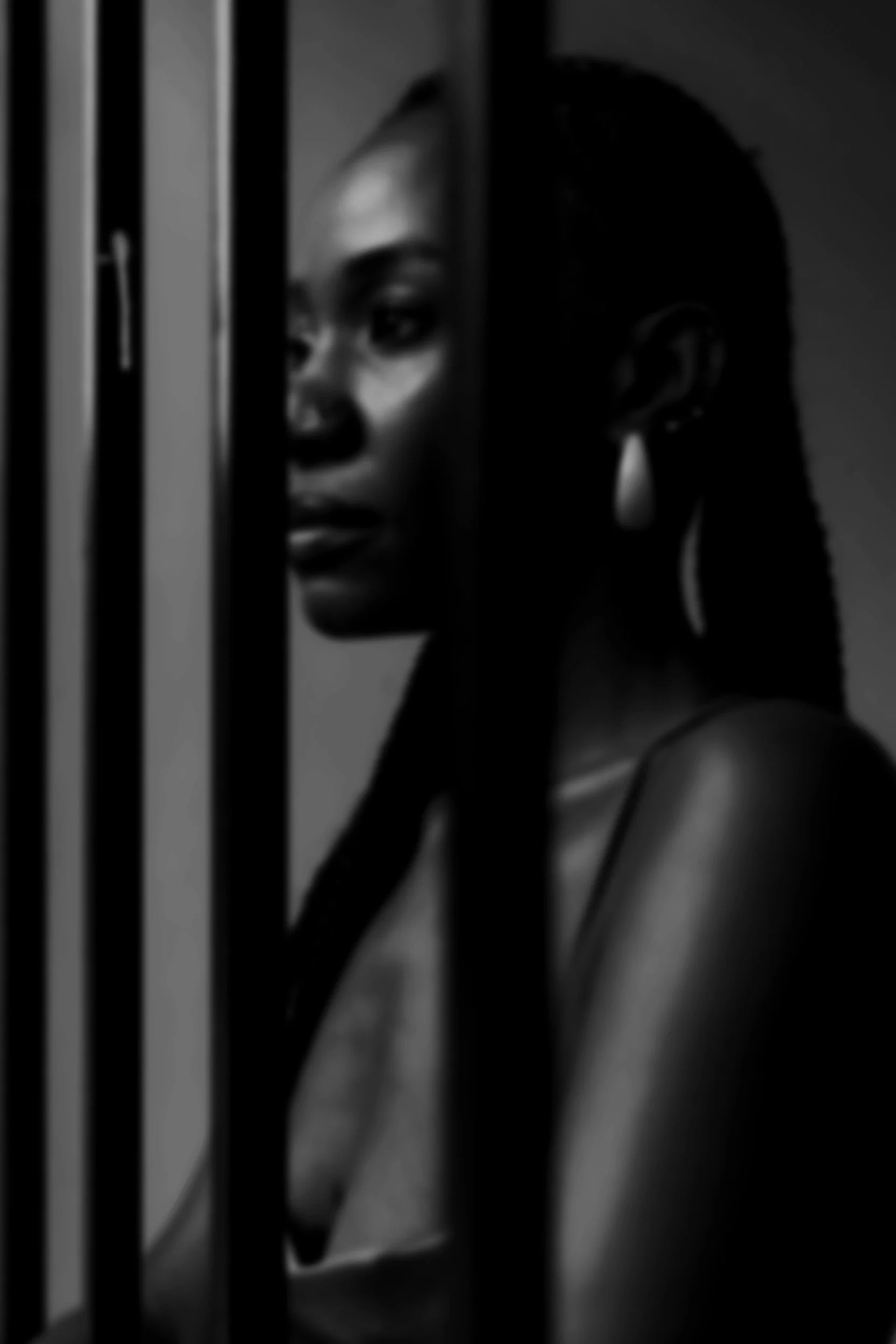
CHALLENGES OF WOMEN’S IMPRISONMENT
OP-ED, Edith M. Page
Based on the reading of Race, Gender, and the Prison Industrial Complex by Angela Y. Davis
and Cassandra Shaylor; there are clearly tremendous racial disparities in our criminal justice
prison system. Although the prison population consists primarily of men (more than 90%
of the overall population), Data from various Western countries show that the gender gap has
significantly decreased over the years (Chen, 2009). In the U.S., for example, 9.1% of the
Inmates are women, while the female prison population grew by 832% from 1977 to 2007
(Women's Prison Association, 2010) Women prisoners consist of merely 1.8% of the Israeli
prison population.
Statistics confirms that there were about 100,000 African American males in our prisons, in the
1950’s and about 900,000 in 2015, and today 2022, there are over 2.3 million individuals locked
up in jail or prison. Worst yet, based on the growing prison pipeline being built, 1 in 3 black
males can expect to go to prison sometime in his lifetime, as compared to 1 in 17 while males.
In the last ten years, our prison rates have soared tremendously with women now becoming the
fast-growing group for imprisonment.
Two thirds of women in prison are women of color. The disproportionality is what is so
staggering to me. An African America woman is eight times more likely to go to prison than a
white woman; African American women make up the largest percentage of women in state
prisons (48%) and federal detention centers (35%) even though they are only approximately 13%
of the general population. (Greenfeld and Snell 1999). Harsh sentencing laws, such as mandatory
minimums attached to drug convictions and “three -strike” laws, which can result in a life
sentence for very minor drug offenses. This “trap door” has become the gateway for women of
color to fall into as a disposable population of people for our society’s capital gain.
Additionally, because we know that race is a factor in determining who does and does not go to
prison, the groups most rapidly increasing in numbers are Black, Latina, Asian American and
indigenous women. For women of color who are hit the hardest by the withdrawing of social
resources and their replacement with imprisonment, usually for offensives that are often petty
(stealing diapers and milk for their babies)’ tend to reproduce and indeed exacerbate the very
problems they purport to solve. Criminalizing social problems should be addressed as public
health issues not crimes. Illiteracy, homelessness, unemployment, drug addiction, mental
illness, and other non-criminal factors play a huge role in the broken system of incarceration.
According to Beth Ritchey, (class power point) the incarceration of the black, indigenous, and
transgender women are the most victimized community being affected by the injustice of
incarceration. She states that women verbalize a more acutely more painful experience than their
counterparts. They suffer losses of family, power autonomy and control, psychological effects,
and mental health issues. They have very serious concern for the lack of privacy, intimacy, and
trust.
In what can be seen as the penal equivalent of ambulance chasing, architectural firms,
construction companies, and other corporations are helping to create a new women’s prison
complex throughout the world. Not only are the women exploited by the prison system on the
“outside, but they are also violated mentally and physically on the “inside”. Sexual abuse by
guards and other inmates is the obvious challenges most hear about, but; medical neglect is just
as bad. They sometimes have no breast or GYN exams, (one of the most problematic areas in the
prison). Women are often demonized for even asking for help as they find lumps in their breast,
growths and masses visibly seen in their abdominal area so much so that they appear to be 9
months pregnant.
Violence in prison is directed at the psyche as well as the body. Mental illness, and the mental
and psychic disturbances by imprisonment itself; being cut off from family, over crowed
conditions, depression, lack of counseling and the lack of guards for protection or even the
slightest concern about a women’s well being is enough to drive many to suicide. Solitary
confinement is another mental drain that cannot even be described sufficiently to someone who
cannot even phantom loneliness, but then even worse is the humiliation of being placed into a
“strip cell after a strip search of all body cavities, (no clothing, sheets, or anything but a mat; is
the worse imaginable feeling that women report suffering.
Despite the significant obstacles encountered by those who want to challenge conditions of their
confinement and treatment, are some who try through legal methods. Women prisoners find
many ways to meaningfully organize and contest the injustices of imprisonment. Formal or
informal, peers’ network to provide information and support ranging from heath care disparities,
molestation, labor conditions and prevention of the violation of their basic human rights. Some
has gone as far as to file individual and class action lawsuits demanding protection of their legal
and human rights.
Although those on the “outside” are constantly fighting for a change is the system, such as
decriminalizing the use of drugs as a crime, seeking for drug rehabilitation to be addressed as a
health issue; tackling legislative changes, and challenging the media to have a discourse of
misogyny, poverty, and racism, (that perpetuate the problem). Women “inside” are fighting
harder than ever, and with both outsiders and insiders fighting, over time these challenges are
bound to change.

Blog Post Title Two
It all begins with an idea.
It all begins with an idea. Maybe you want to launch a business. Maybe you want to turn a hobby into something more. Or maybe you have a creative project to share with the world. Whatever it is, the way you tell your story online can make all the difference.
Don’t worry about sounding professional. Sound like you. There are over 1.5 billion websites out there, but your story is what’s going to separate this one from the rest. If you read the words back and don’t hear your own voice in your head, that’s a good sign you still have more work to do.
Be clear, be confident and don’t overthink it. The beauty of your story is that it’s going to continue to evolve and your site can evolve with it. Your goal should be to make it feel right for right now. Later will take care of itself. It always does.

Blog Post Title Three
It all begins with an idea.
It all begins with an idea. Maybe you want to launch a business. Maybe you want to turn a hobby into something more. Or maybe you have a creative project to share with the world. Whatever it is, the way you tell your story online can make all the difference.
Don’t worry about sounding professional. Sound like you. There are over 1.5 billion websites out there, but your story is what’s going to separate this one from the rest. If you read the words back and don’t hear your own voice in your head, that’s a good sign you still have more work to do.
Be clear, be confident and don’t overthink it. The beauty of your story is that it’s going to continue to evolve and your site can evolve with it. Your goal should be to make it feel right for right now. Later will take care of itself. It always does.